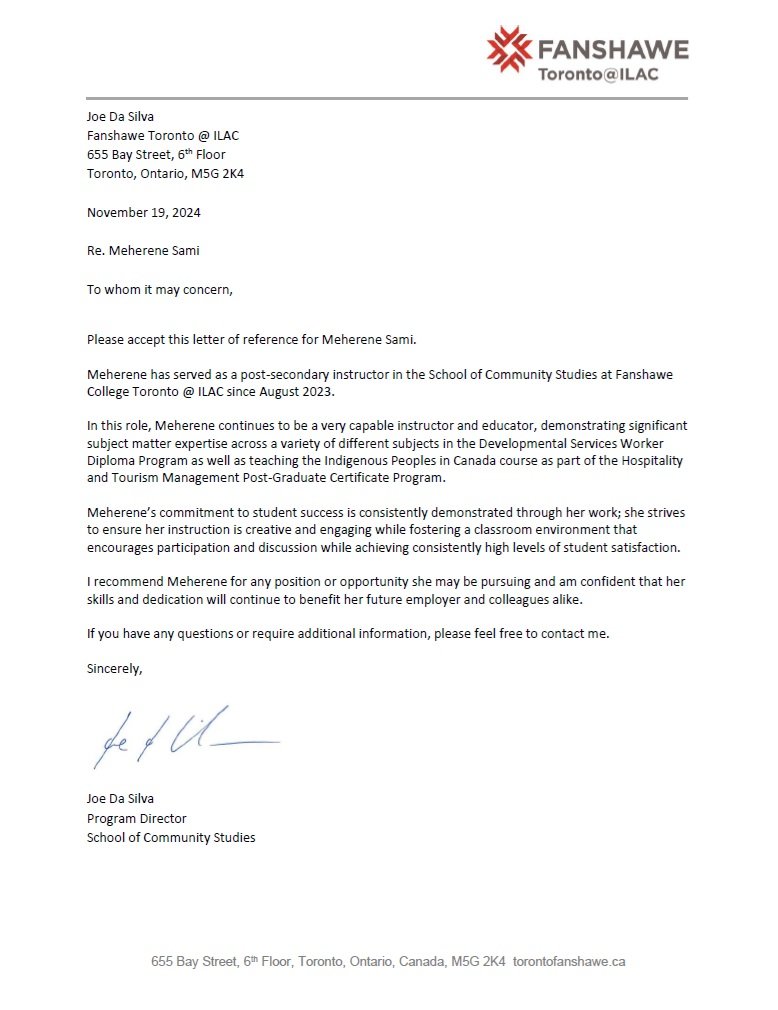
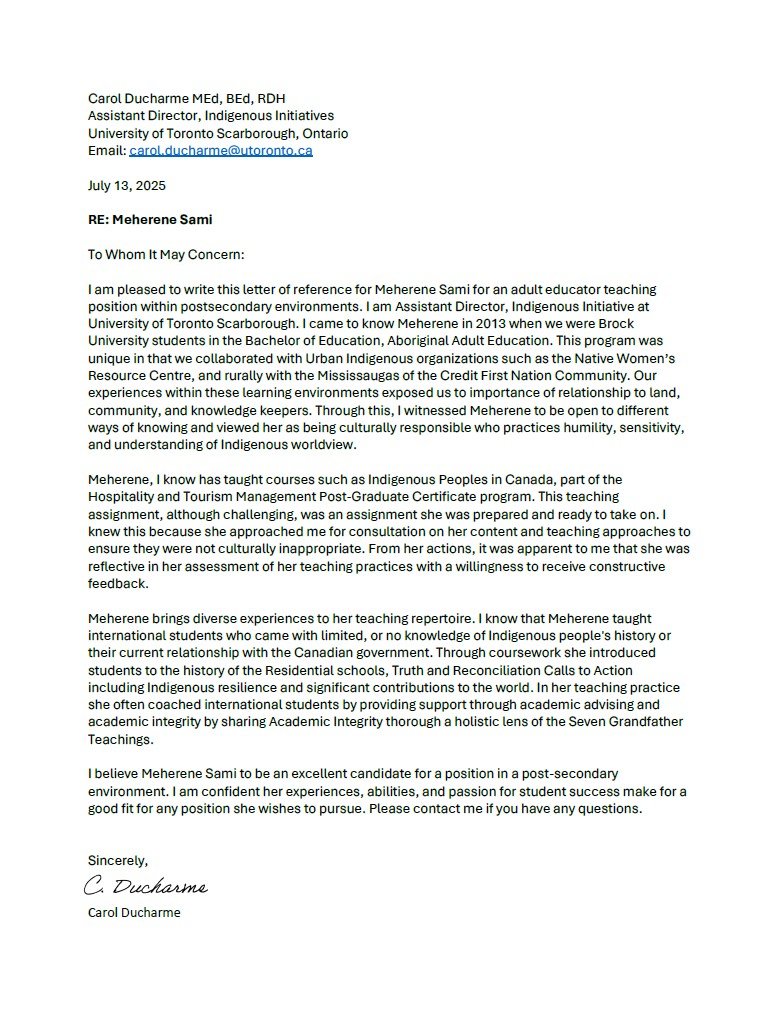
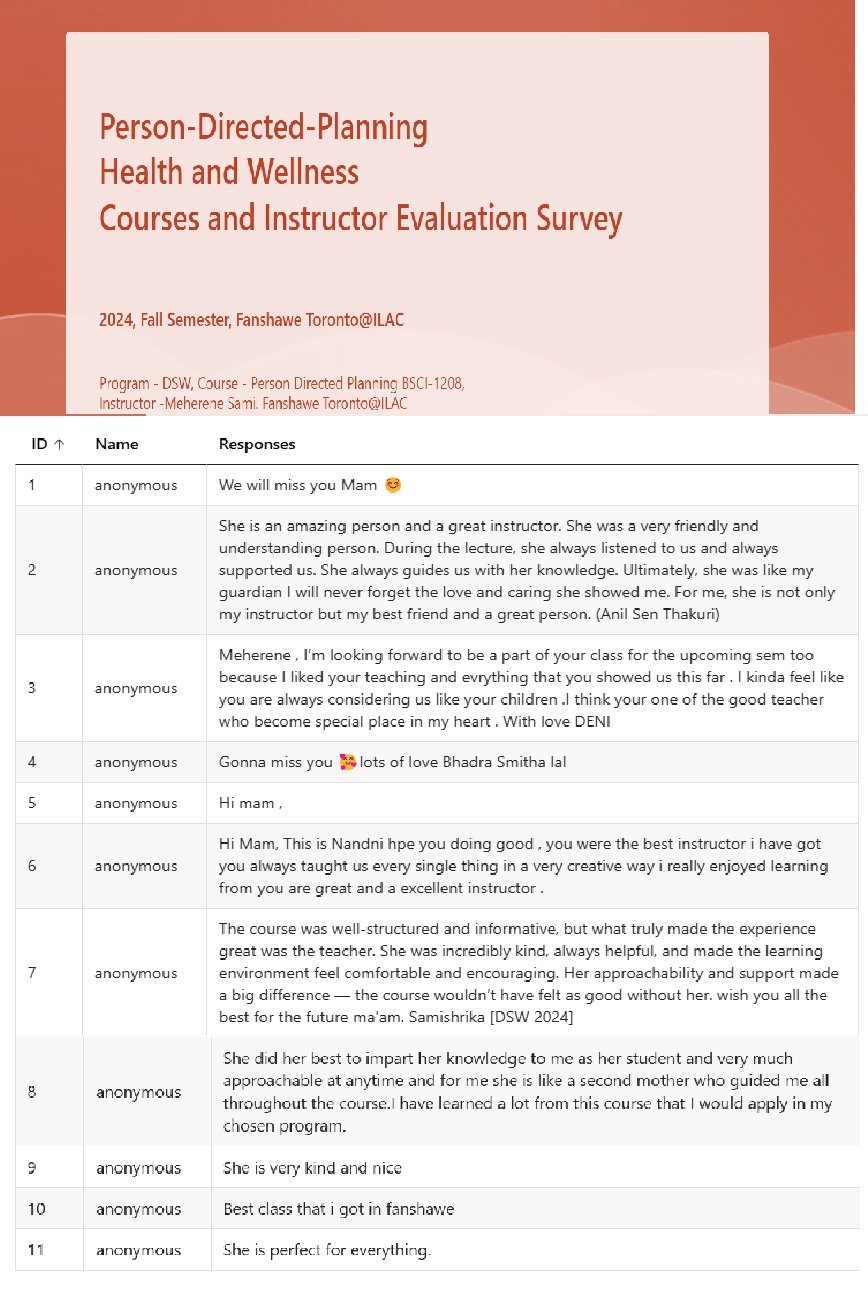
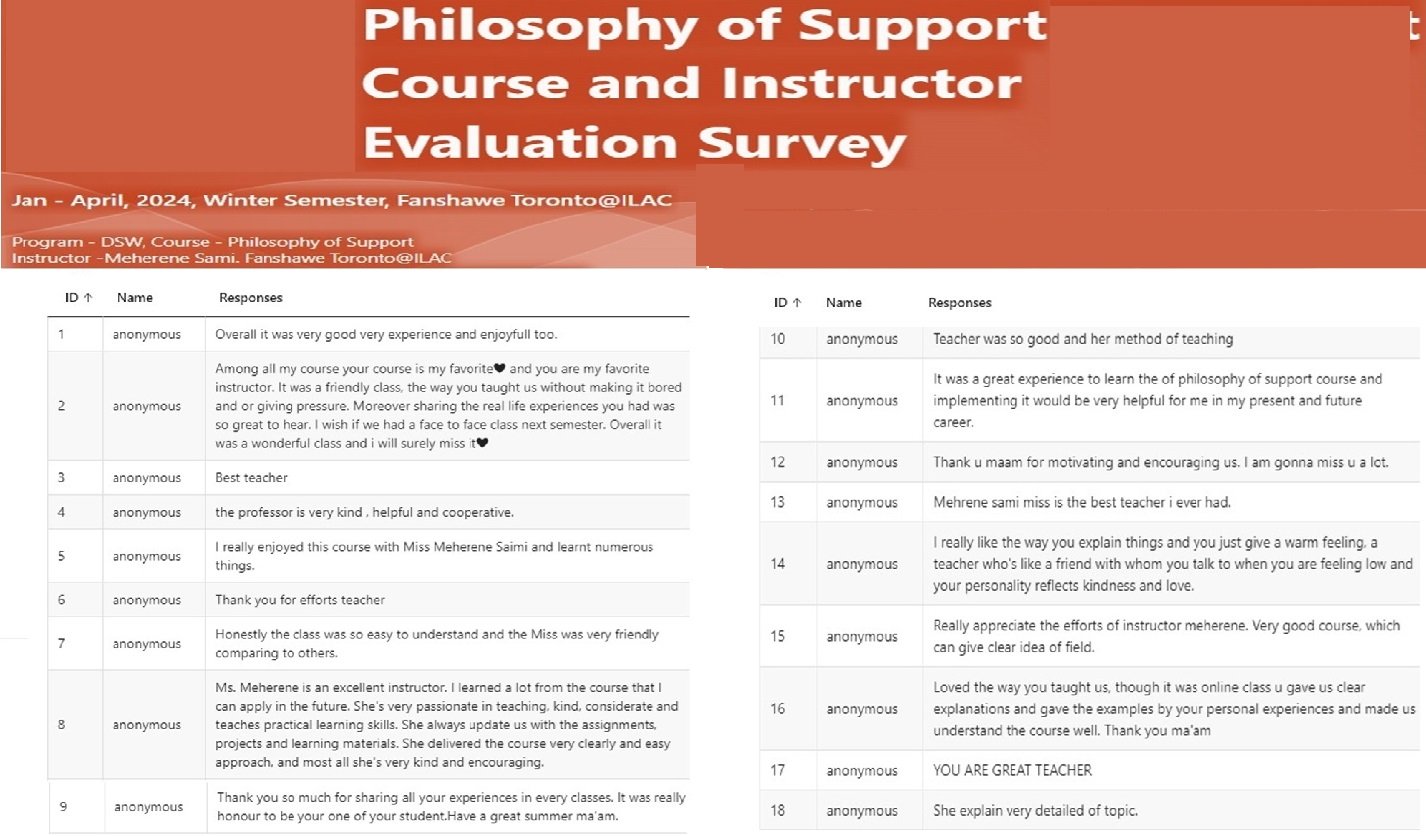
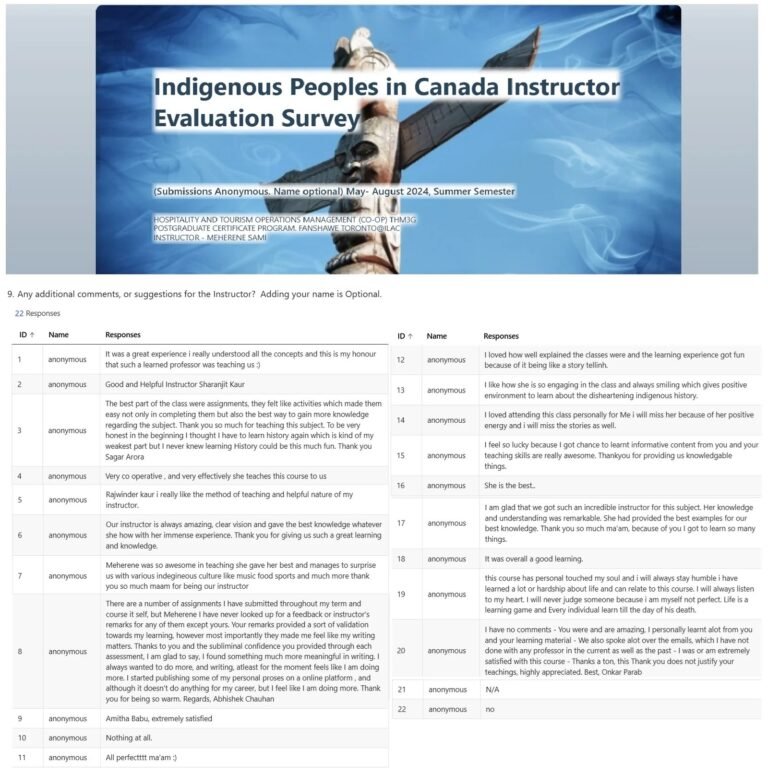
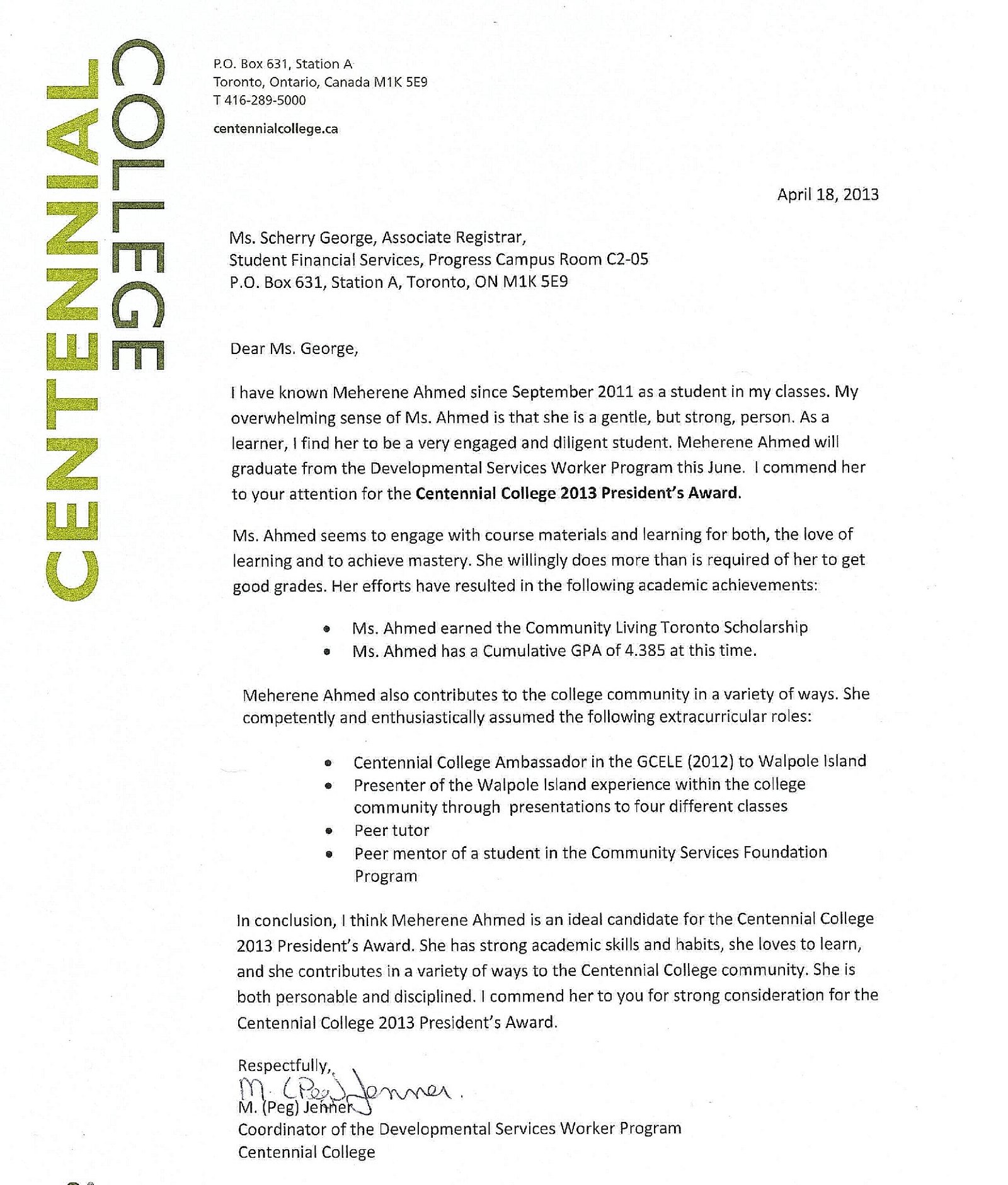
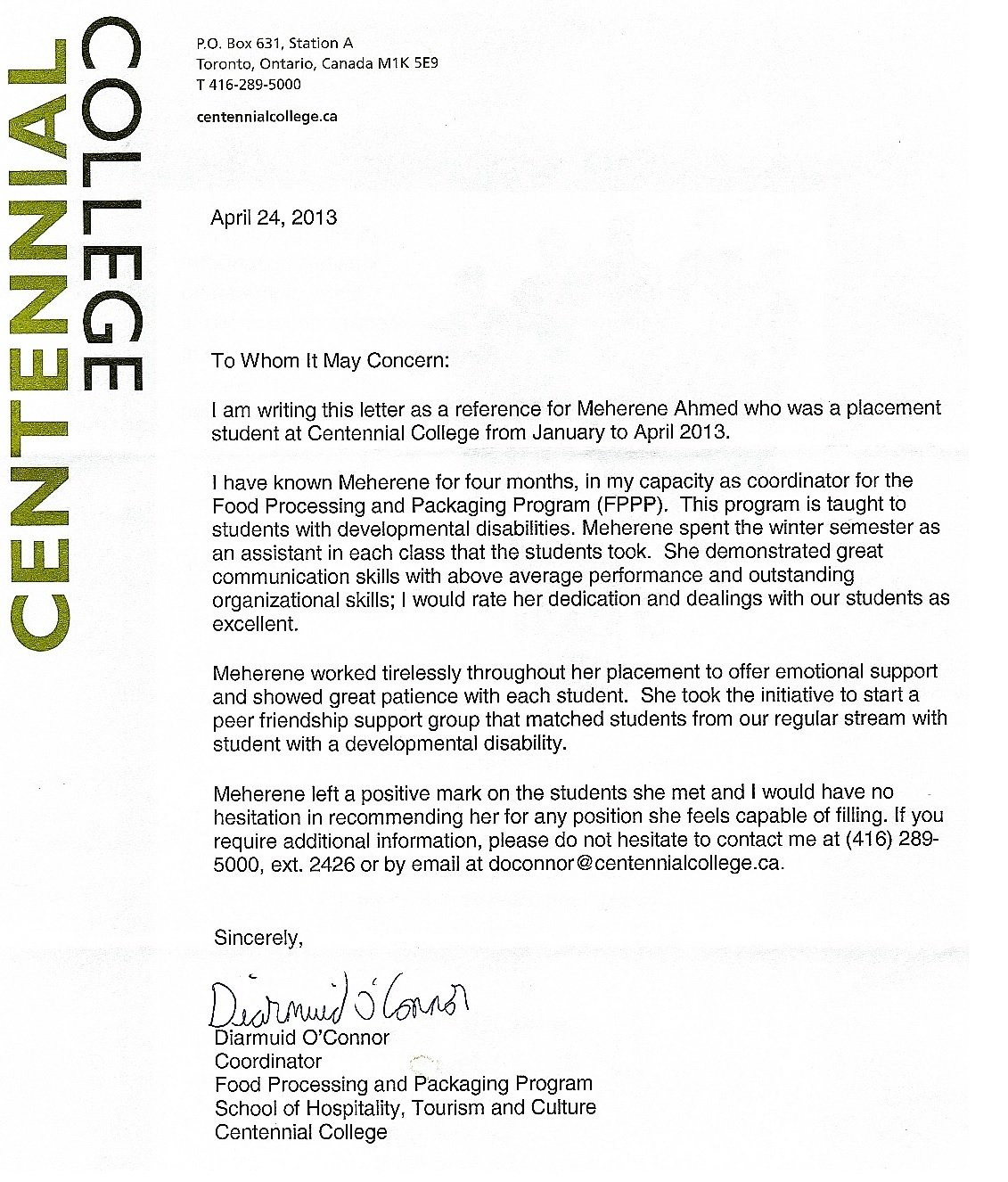
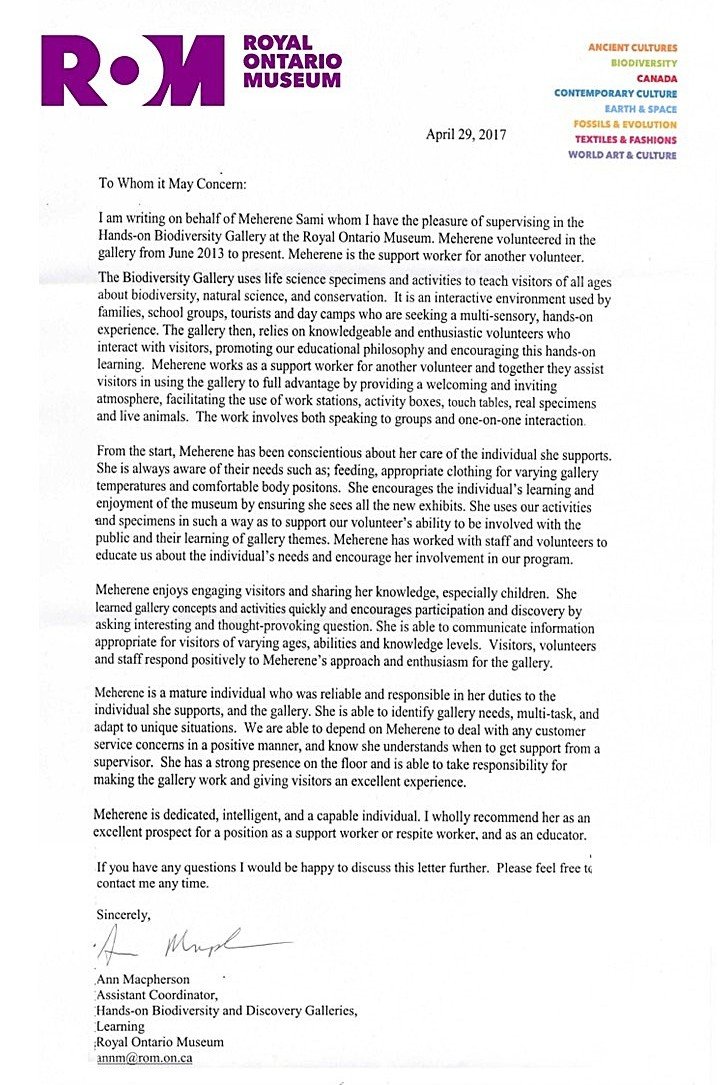
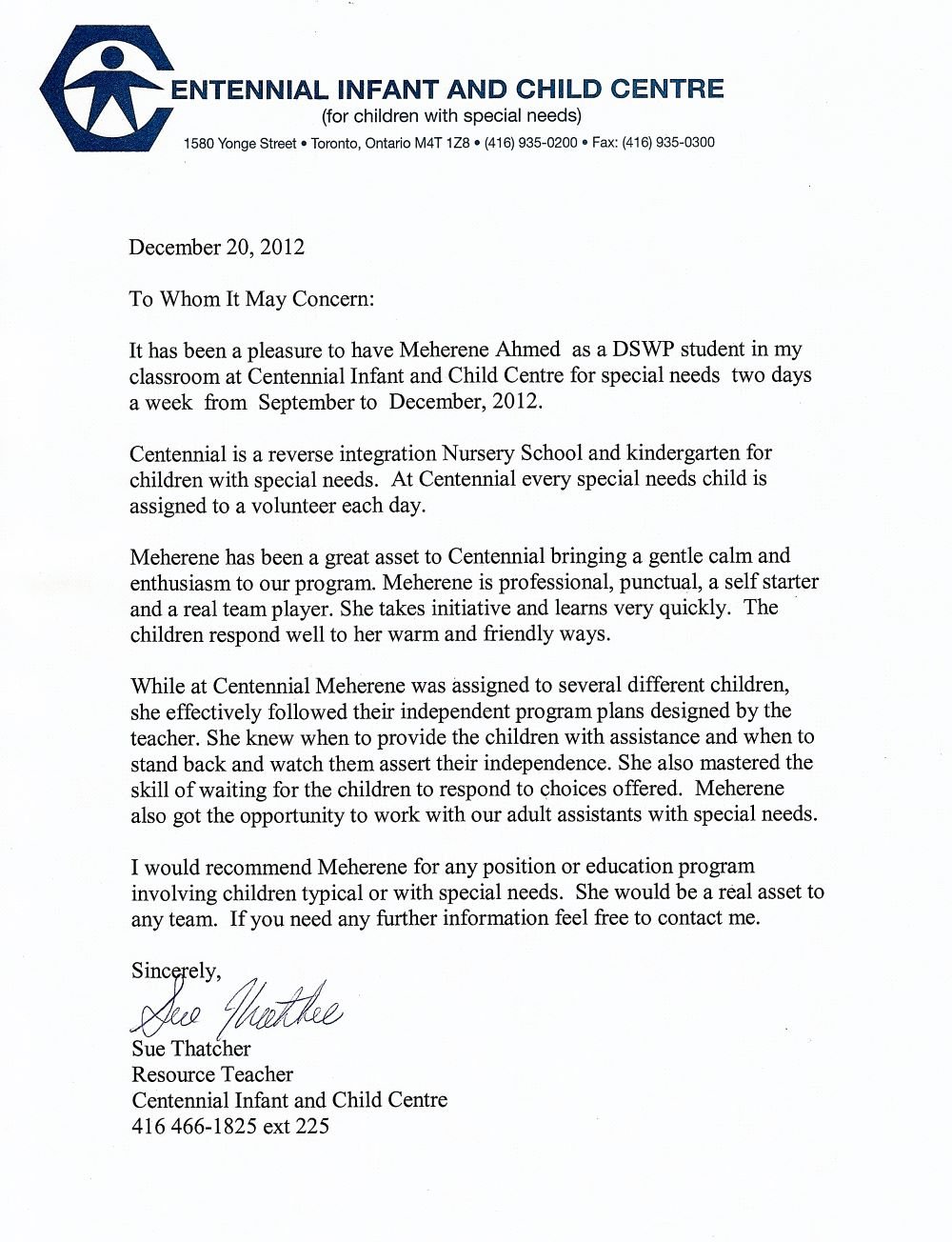
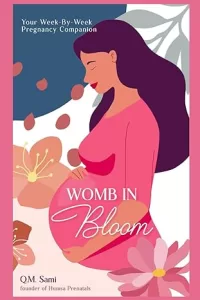
I am Meherene Sami. I am an adult educator, curriculum developer, and the creator and founder of Humsa Prenatals. I have experience working as a college instructor in the Disability field and the Indigenous sector at Fanshawe Toronto@ ILAC College, teaching nearly 250 international students each term. In my 11 years of experience working in the disability field, I supported people with a wide range of disabilities, including Cerebral Palsy, Acquired Brain Injury, Down syndrome, and Autism. I have experience working with people of different abilities, races, and ages (0 to 87). I am a lifelong learner currently studying a Master of Education (Post Secondary Education) at Memorial University. People describe me as a warm, gentle, yet strong mentor who directs students toward a compassionate, empathetic course of action. I love exploring the outdoors and dabbling in Sufi music in my free time.
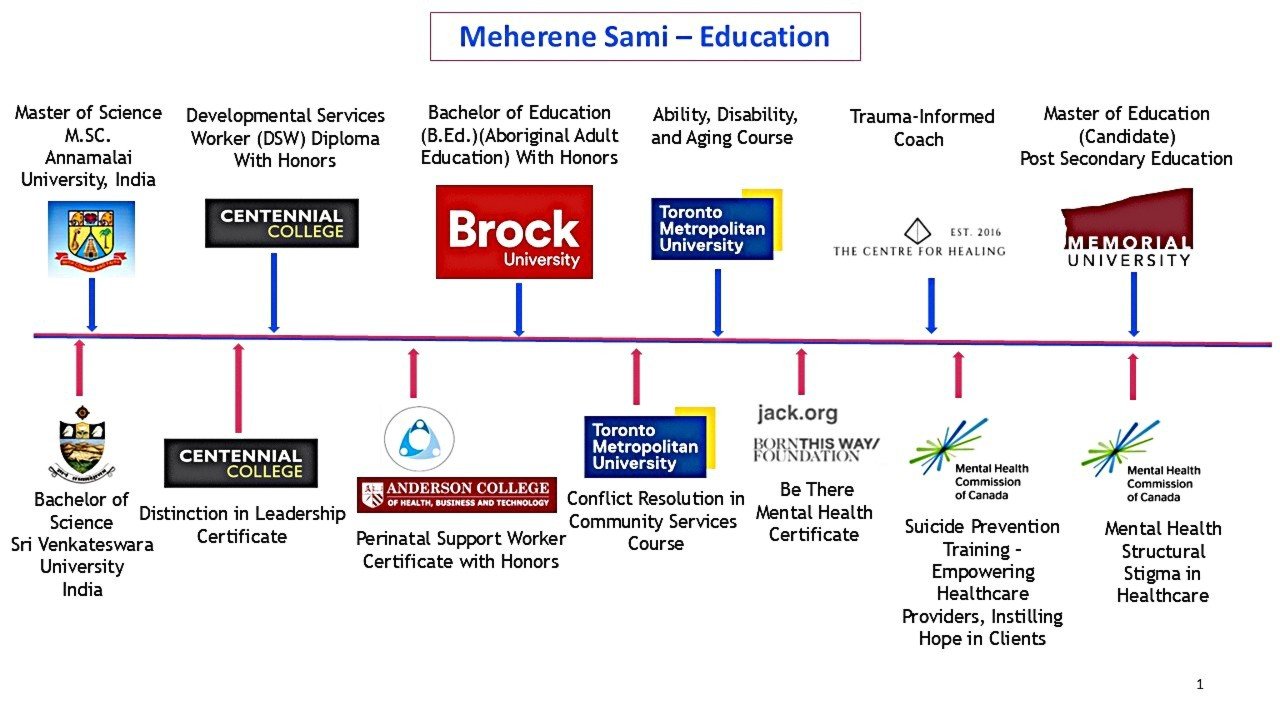
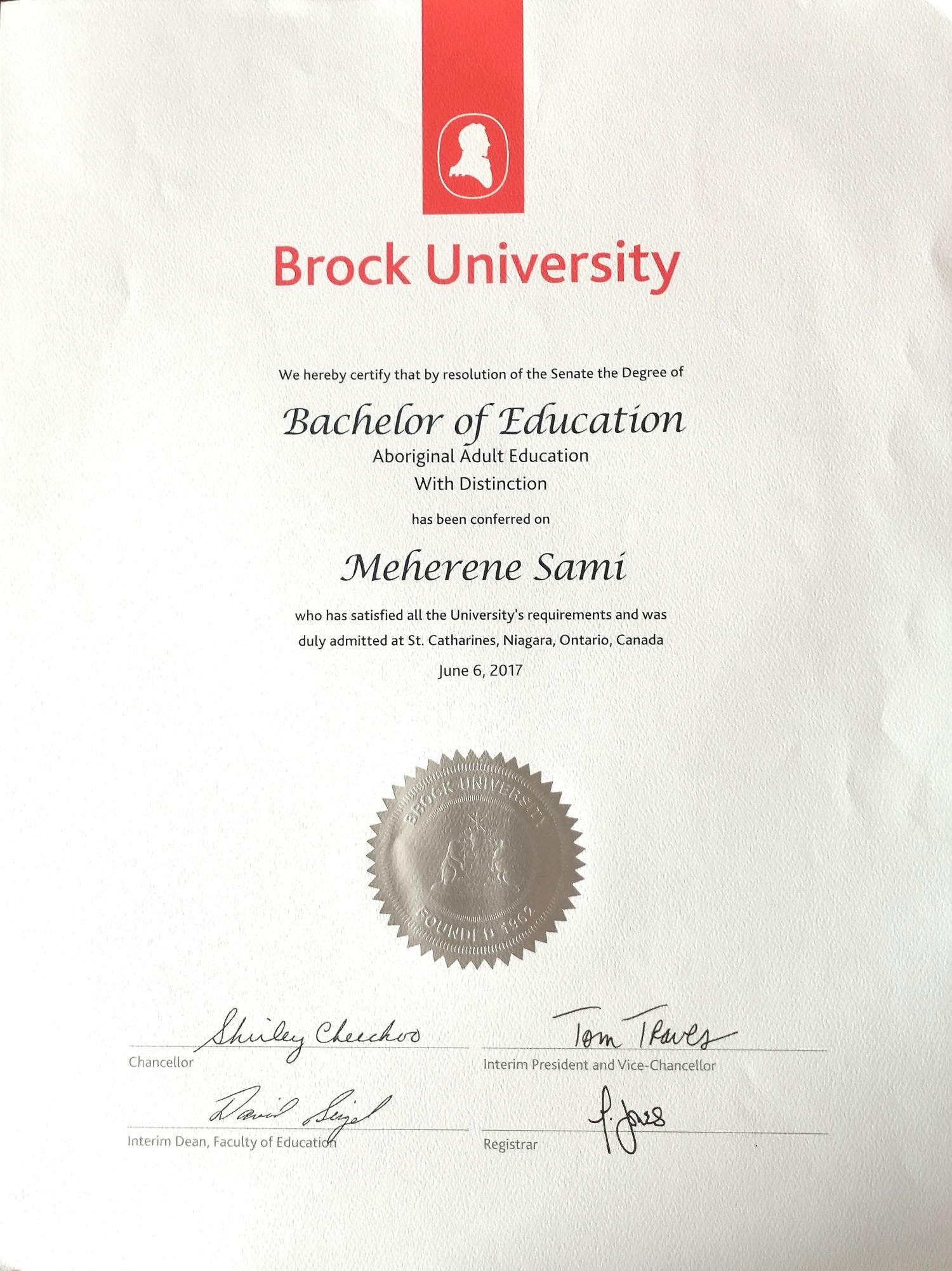
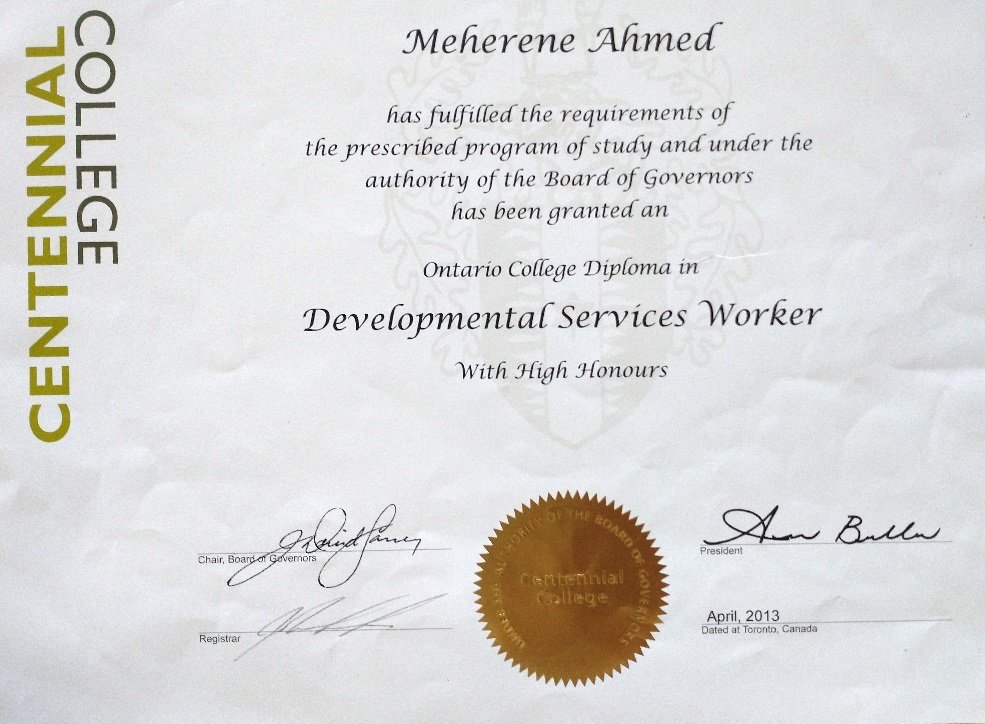
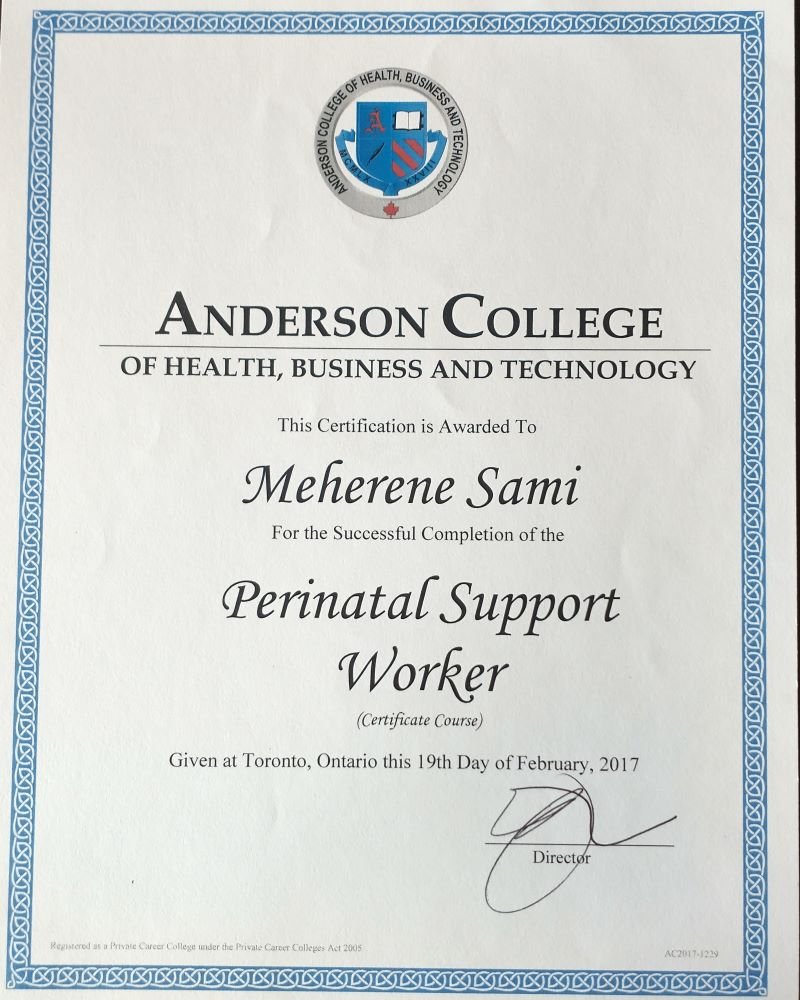
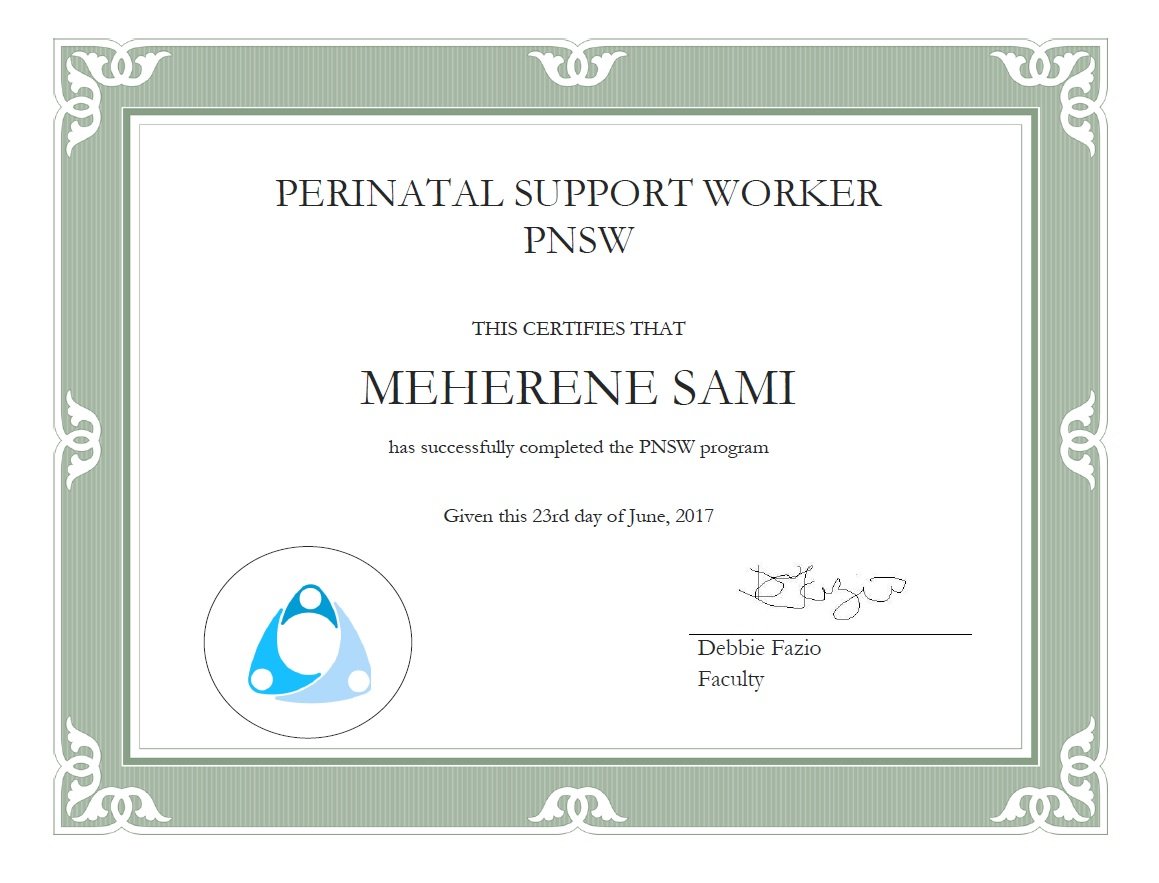
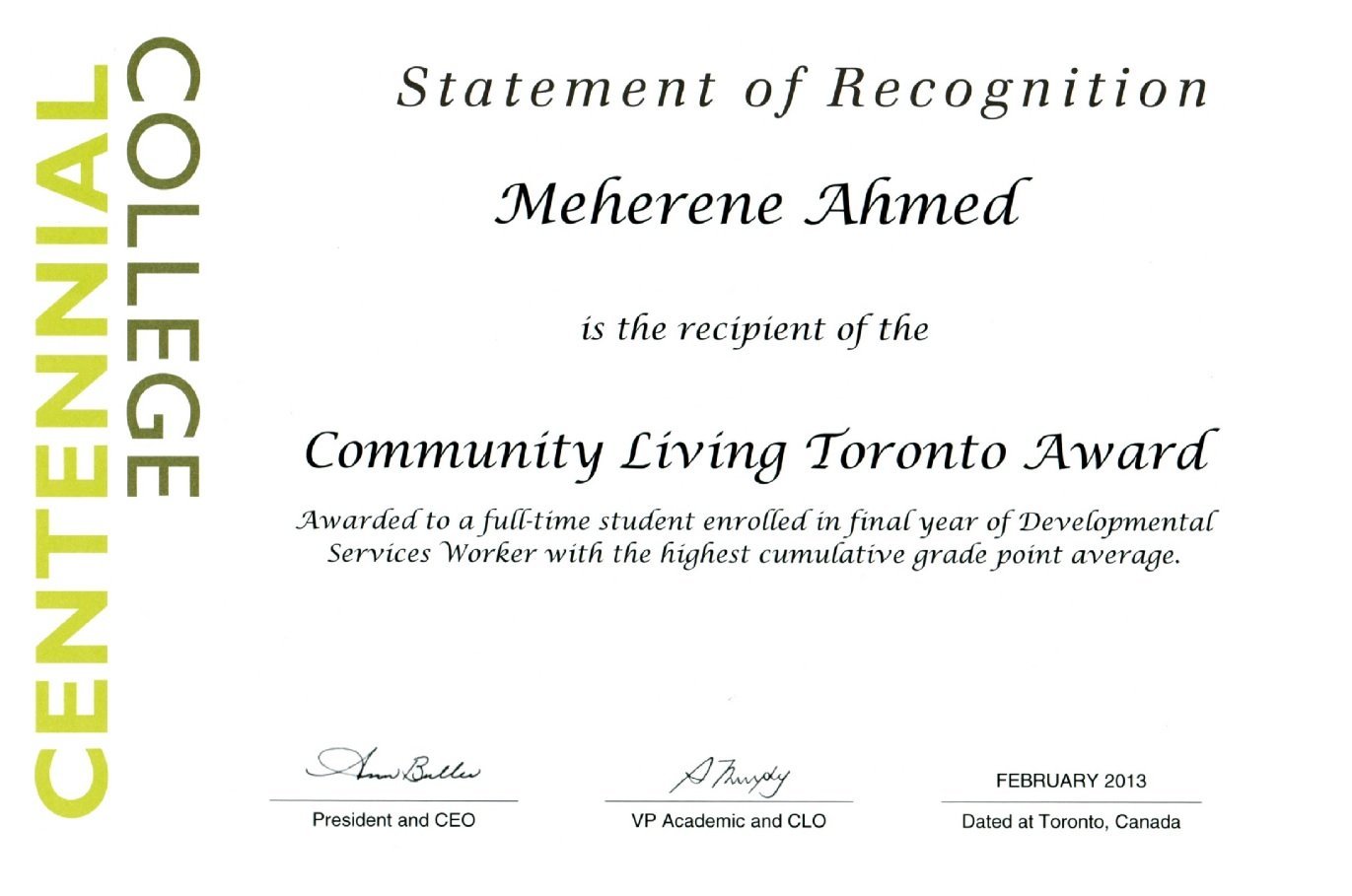
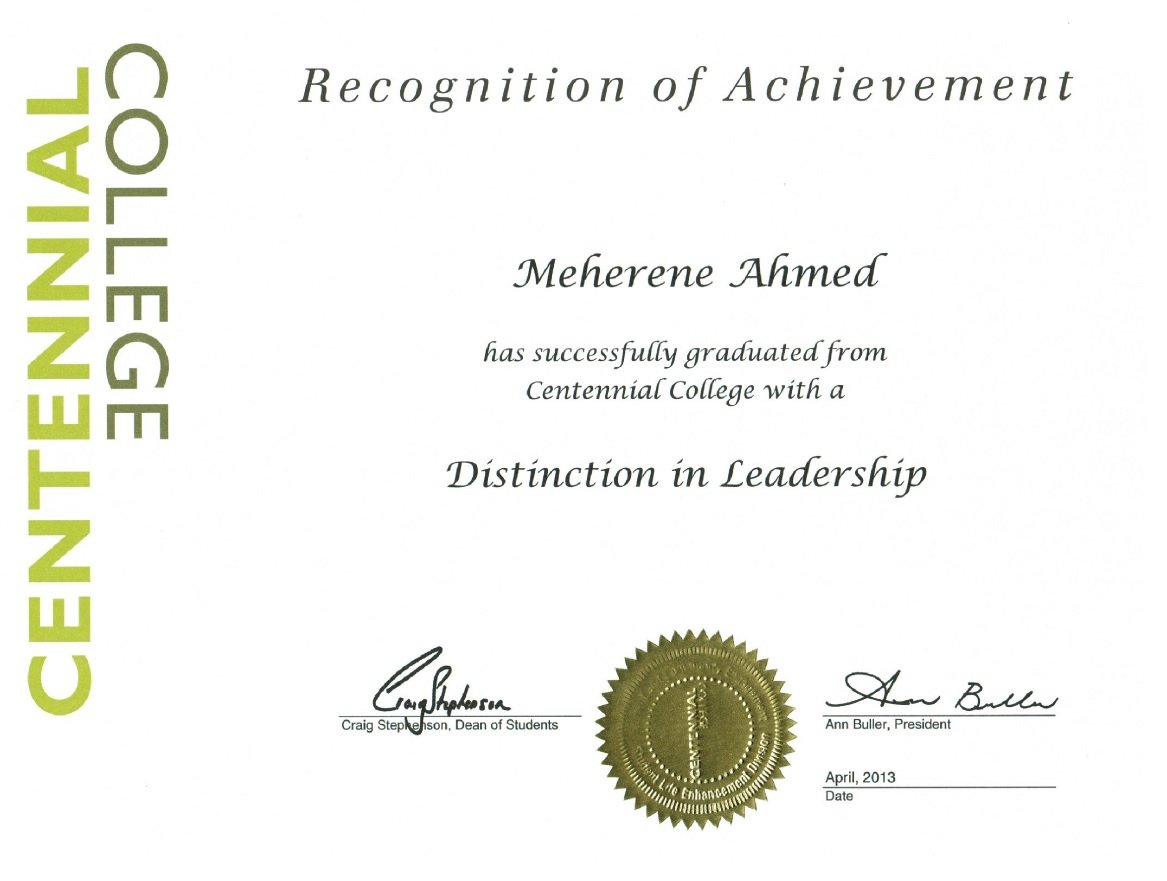
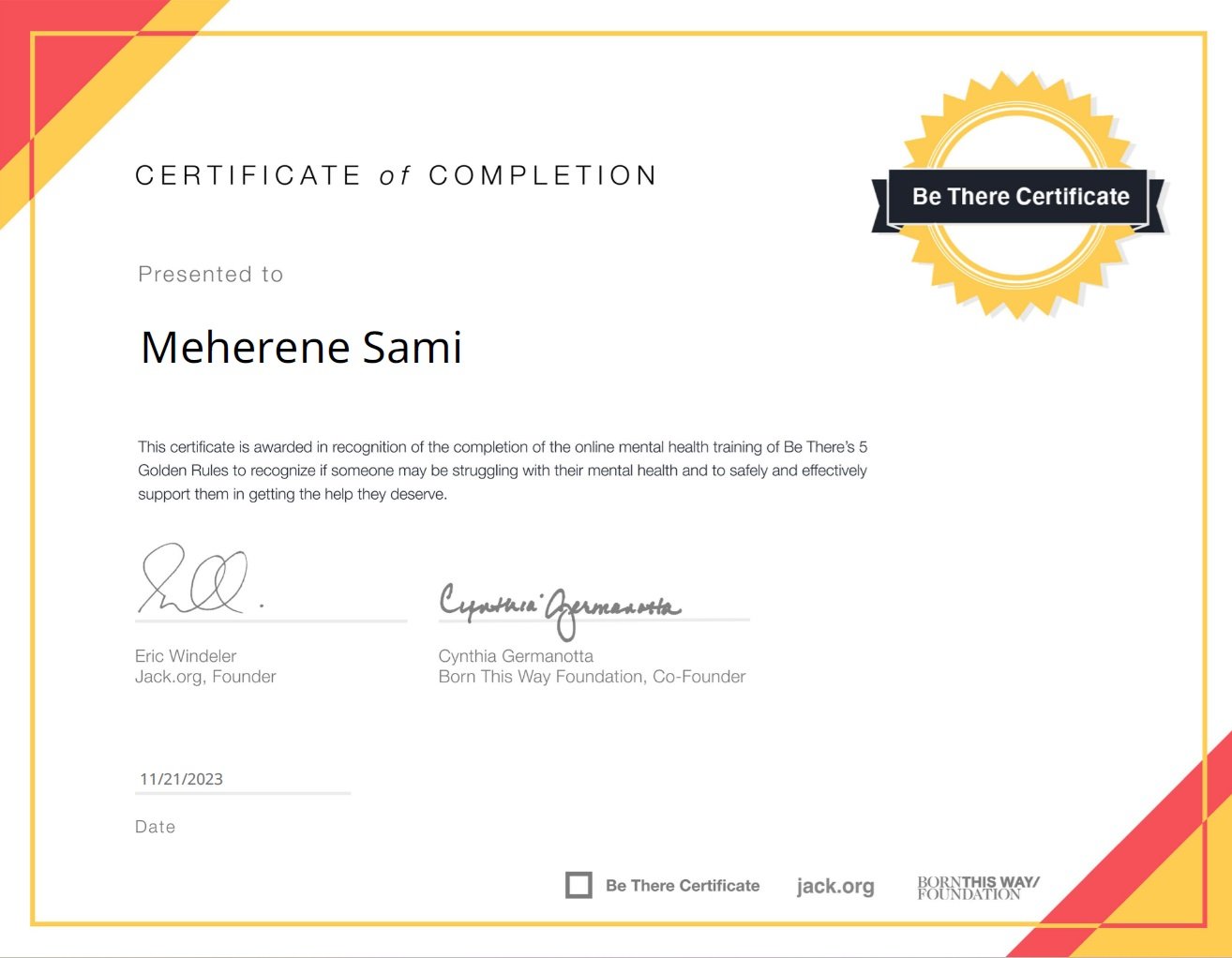
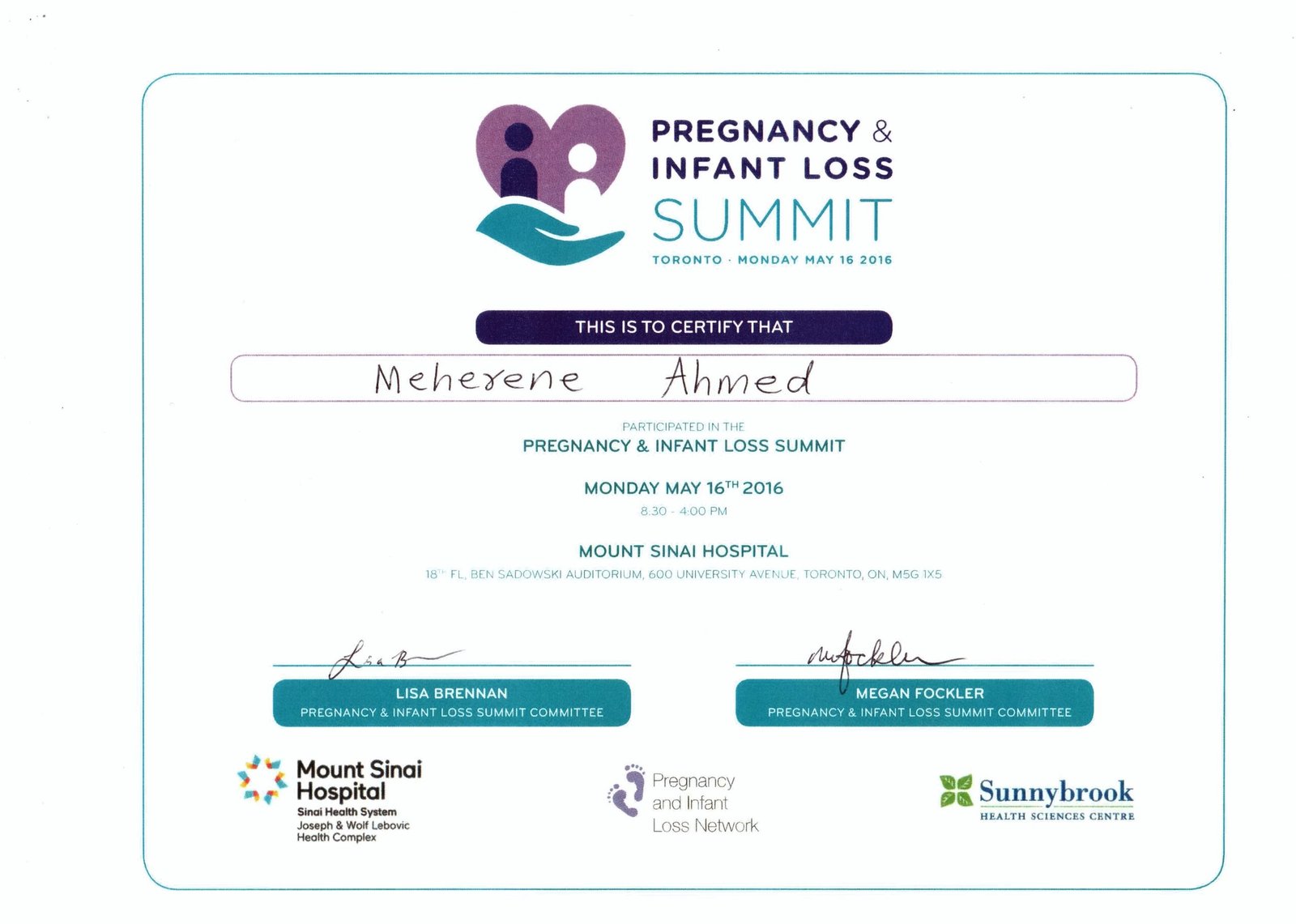
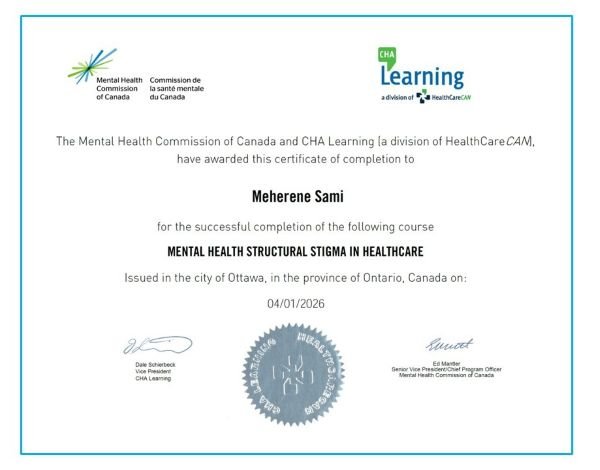
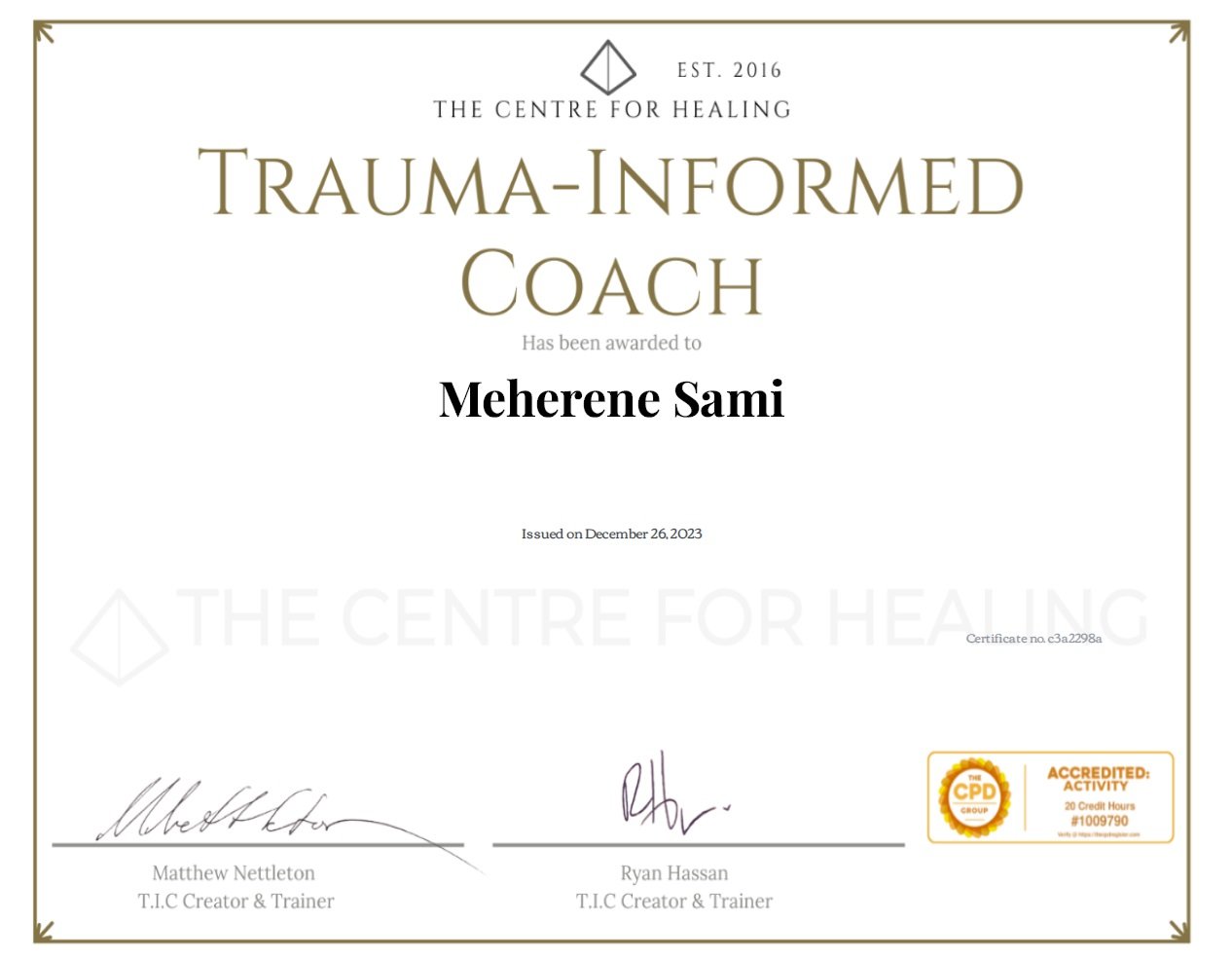
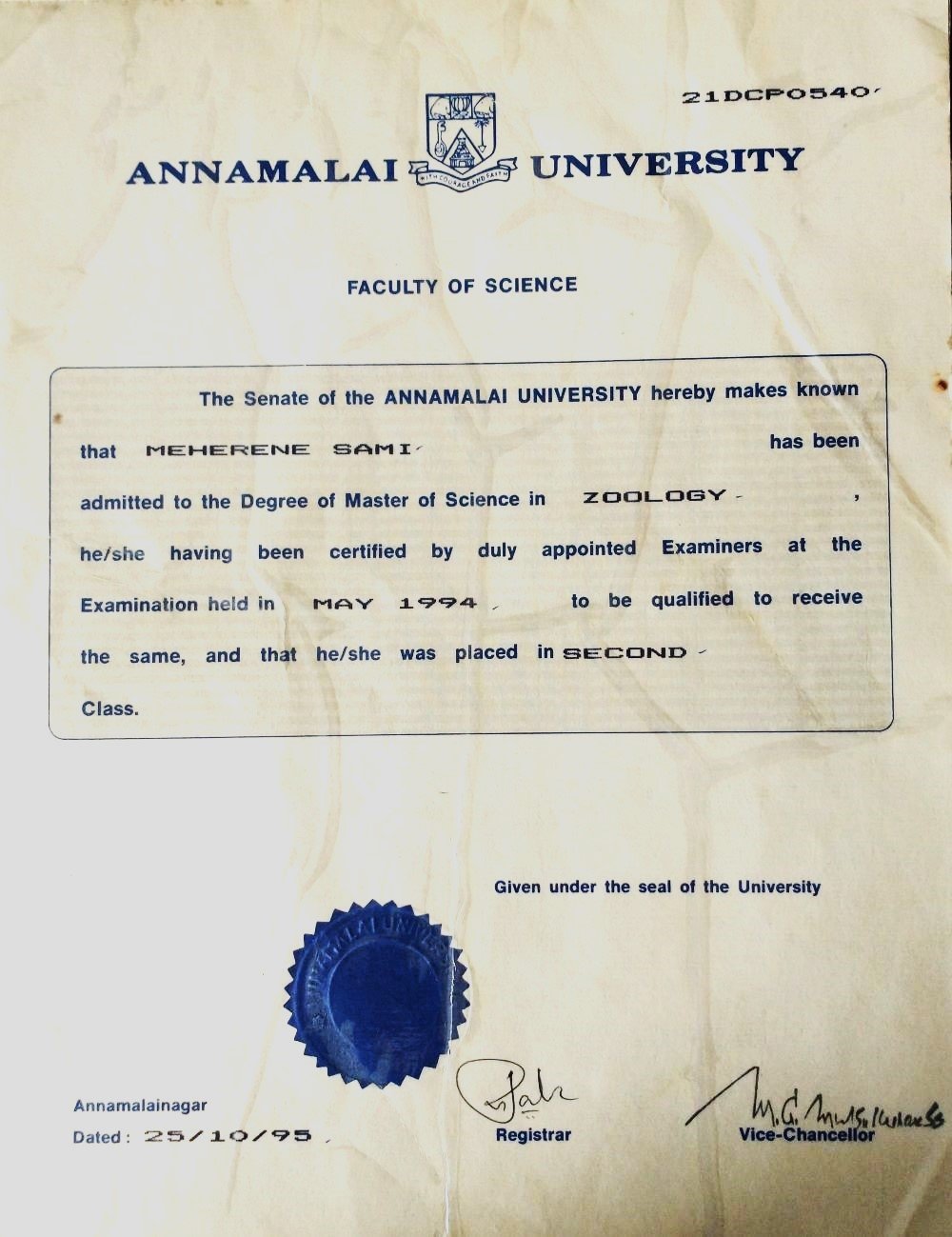
Meherene Sami - Education
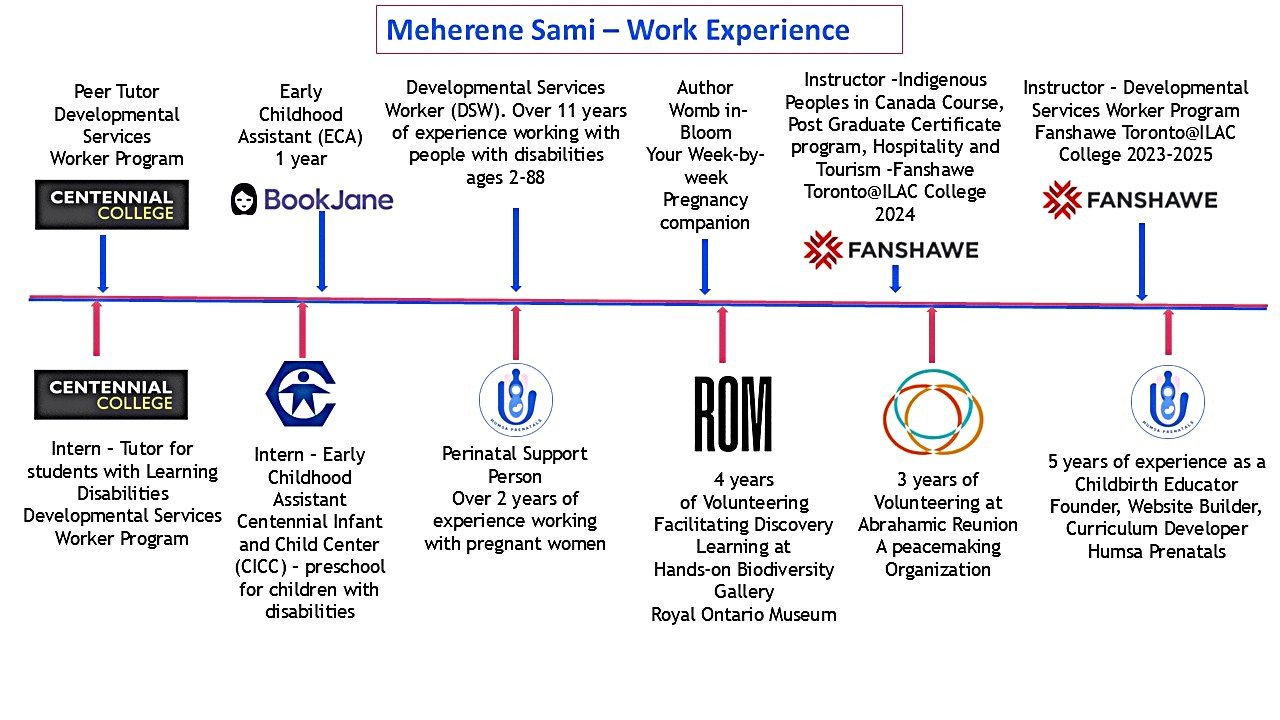
Meherene Sami - Work Experience
There are two aspects of Knowledge - Learning and Knowing. Learning involves discovering the characteristics of an abstract concept or a nonabstract thing.
For example, A theory learned from a textbook may give all the details of the components needed to acquire a skill (viz., what, where, when, why, how, and who). The belief behind this process is – “I think it is so (or the author thinks it is so), and hence it is.”
On the other hand, knowing has its foundation in the conviction – “I know it is so, and hence it is.” It can only be likened to the process of discovery through the heart. Learning could lead to knowing.
My Inspiration
Sufi teacher Pir Vilayat Khan gives an example of a mother giving
her child a puzzle and asking, "Can you see the pixie in the tree?” The
daughter searches the puzzle. However, she cannot see the pixie as it is
camouflaged within the leaves and flowers. The mother persists in asking the
child to look again, and suddenly the daughter spots it and exclaims, “Yes,
Mommy, I see it!” Pir Vilayat calls it a “flash of intelligence” in which “the
whole face of the child lights up” (Memories of a Mystic: An intimate
portrait of Pir Vilayat Inayat Khan. (2004). The learning in the above
example is that of the mother pointing to a butterfly and the daughter seeing
it. Knowing can be summed up as the connection formed in the child’s heart:
(a)to the mother’s guidance. (b) to the butterfly waiting to be spotted by the child at
that moment. (c) to the image of the butterfly in the child’s mind, being
replaced or affirmed by the real image. (d) to the discovery that she now knows it is there and (e) to the happiness that came through their shared
understanding of the experience.
Sometimes, this knowing happens when people connect two or more ideas, and
suddenly, the truth gets revealed, which in spiritual terms is called a
‘revelation.’ The more learning is oriented towards truth, the more the
possibilities of knowing, and the more we find to learn. My teaching Philosophy as a Developmental Services Instructor or a Childbirth
educator is based on something other than gathering information and regurgitating
the facts. It is based on understanding the people we serve, empathizing with
them, and forming connections between hearts.
Reference:
Memories of a Mystic: An intimate portrait of Pir Vilayat Inayat Khan. (2004).Pir Vilayat Inayat Khan Digital Archive. https://www.pirvilayatarchive.org/s/pvik/item/209